30 Real AI Advertising Examples (2026)
Vinay Jain
7 min read|Updated Jun 4, 2026

Most "AI advertising" roundups are either hype or a flat list of logos. This one is different: below are 30 real AI advertising examples, but sorted by the only thing that actually matters — what the brand was trying to achieve. Because "using AI in advertising" isn't one thing. Coca-Cola used it to manufacture buzz. JPMorgan used it to lift conversion. A DTC store uses it to ship 40 ad variations a week. Same technology, three completely different jobs — and copying the wrong one is how brands waste money on AI.
What is AI advertising? AI advertising is the use of artificial intelligence — generative models, personalization engines, and optimization algorithms — to create, target, or optimize ads. In practice it splits into three distinct jobs: making the creative, optimizing performance, and producing creative at volume.
The 3 jobs AI actually does in advertising
Before the examples, the framework they fall into — because it tells you which playbook to copy:
AI as the creative — generative video/image/voice is the ad. Goal: buzz, PR, brand fame. High ceiling, hard to repeat.
AI as the optimizer — AI personalizes or chooses the creative and buys the media. Goal: measurable performance (CTR, ROAS). Quiet, but where the money is.
AI as the production engine — AI mass-produces ad variations. Goal: creative volume to feed algorithmic testing. This is the job most brands actually need in 2026 — and where DTC has moved fastest.
Job 1 — AI as the creative: the buzz plays
These are the famous AI advertising examples. The lesson in every one is the same: the AI wasn't the point — a human insight was, and AI made it executable.
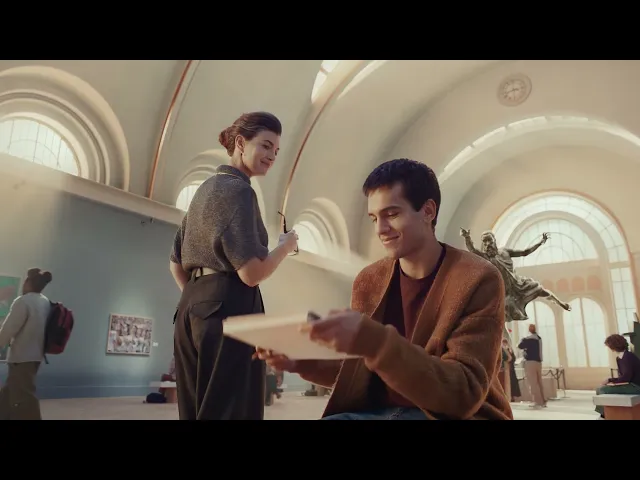
1. Coca-Cola — "Masterpiece" (2023).
Coca-Cola used generative AI to animate famous paintings passing a Coke bottle between them, then opened a "Create Real Magic" tool (GPT-4 + DALL·E) so fans could make their own branded art.
Why it worked: the insight — "great art inspires" — was human; AI just made it impossible to make any other way. The official film passed 3.7M YouTube views and won D&AD awards.
Lesson: lead with an idea AI uniquely enables, not "we used AI."
2. Heinz — "A.I. Ketchup" (2022).

Heinz asked DALL·E 2 to "draw ketchup" — and nearly every image came back looking like a Heinz bottle.
Why it worked: it turned an AI limitation (bias toward the category leader) into proof of dominance, at near-zero production cost. It drove 850M+ earned impressions (worth 2,500%+ more than the media spend) and ~38% higher engagement than past campaigns.
Lesson: the cheapest AI ads exploit what AI reveals, not what it renders.
3. Volkswagen Brazil — "Generations" (2023).
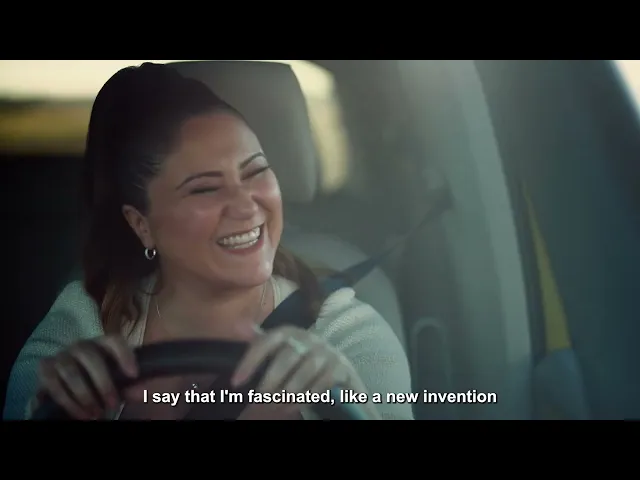
For VW's 70th anniversary, AlmapBBDO used AI deepfake (StyleGAN 3) to reunite late singer Elis Regina — who died in 1982 — with her living daughter Maria Rita in a duet.
Why it worked: emotional payload, not novelty; the family approved it first. It hit 50M+ organic views and topped trending charts.
Lesson: AI resurrection only works with consent and a real emotional reason — otherwise it's a stunt that backfires.
4. Cadbury — "Not Just a Cadbury Ad" (India, 2021).
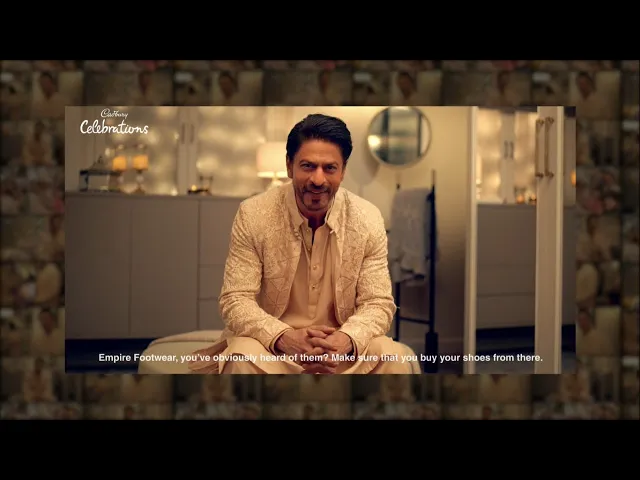
AI recreated Shah Rukh Khan's likeness and voice (Rephrase.ai) so 2,500+ small shops across 500+ pincodes could each have SRK name-drop their store.
Why it worked: it pointed celebrity AI at a generous use case — helping small businesses. It drove ~35% sales growth, won a Clio Gold, and was named the world's most effective campaign in WARC's 2024 rankings.
Lesson: personalization at scale beats one hero spot.
5. Toys"R"Us — "The Origin of Toys'R'Us" (2024).

The first brand film made largely with OpenAI's Sora, telling founder Charles Lazarus's origin story; it premiered at Cannes Lions 2024.
Why it worked (and didn't): it earned first-mover press, but also criticism for an uncanny look — a useful warning.
Lesson: being first with a new model buys attention, but the craft bar still applies.
6. Virgin Voyages — "Jen AI" (2023).
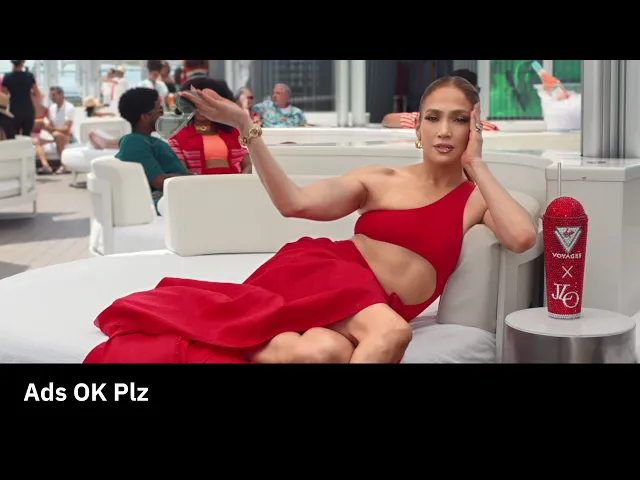
VML built an AI Jennifer Lopez that let users generate personalized cruise invitations — and the spot openly spoofed AI by "malfunctioning" to reveal a guy named Kyle in a mocap suit.
Why it worked: self-aware humor defused the creepiness of celebrity AI. It generated 2B+ impressions and 25,000+ personalized invites.
Lesson: wink at the tech; audiences forgive AI when you're in on the joke.
7. Lexus — "Driven by Intuition" (2018).

The first AI-scripted ad: IBM Watson analyzed 15 years of Cannes-winning car ads to write the script, which Oscar winner Kevin Macdonald then directed.
Why it worked: the human director rescued a clunky AI script.
Lesson: AI is a strong researcher and a weak storyteller — keep a human in the edit.
8. Nike — "Never Done Evolving" (2022).
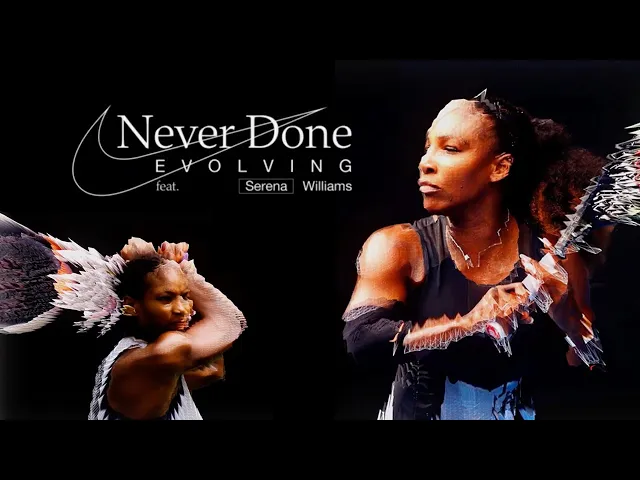
For Nike's 50th, AKQA used machine learning (building on Stanford's vid2player) to simulate a match between 1999 Serena and 2017 Serena — 130,000 simulated games — broadcast as a livestream reaching ~1.69M.
Why it worked: AI answered a question fans actually argue about.
Lesson: the best AI creative resolves a real fan curiosity, not a tech demo.
9. Mango — "Sunset Dream" (2024).
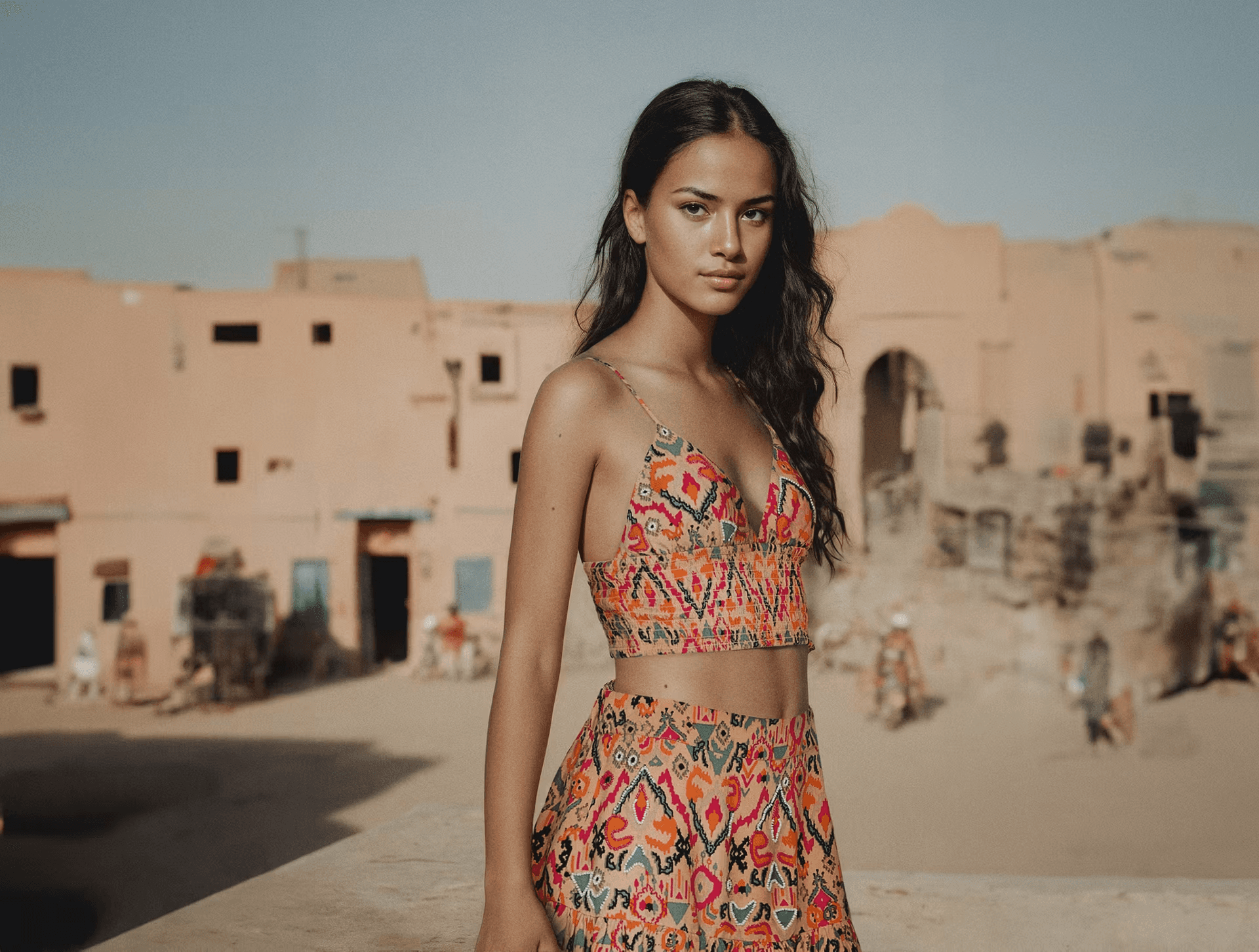
Mango ran its first fully AI-generated fashion campaign for its teen line across 95 markets: real garments were shot, then a generative model placed them on AI models in AI scenes.
Why it worked: it kept the product real and used AI only for the surroundings.
Lesson: in commerce, keep the thing you're selling photographically true; let AI handle the set.
10. Klarna — generative creative in-house (2024). Klarna shifted image production to generative tools (Midjourney, DALL·E, Firefly), making 1,000+ images in a quarter. Why it worked: it treated AI as an operations upgrade, not a campaign. Result: ~$10M annualized marketing savings, a 25% cut in external agency spend, and image cycles dropping from 6 weeks to 7 days. Lesson: the biggest AI ROI is often boring — speed and cost, not a viral film.
Job 2 — AI as the optimizer: the quiet performance plays
Less famous, more profitable. These brands used AI to decide which creative runs and who sees it. (Outcomes here are described directionally — exact figures vary by source.)
11. Netflix — personalizes title artwork per viewer with ML, so the "creative" itself adapts to taste. Lesson: the creative can be a variable, not a constant.
12. Spotify — turns listener data into AI personalization (AI DJ) and the annual Wrapped phenomenon. Lesson: your own data is ad creative.
13. JPMorgan Chase — tested AI-generated ad copy (Persado) against human copy and expanded its use after the AI versions won on engagement. Lesson: let AI write many variants; let data pick.
14. Michaels — used AI to personalize email/SMS creative across segments rather than one blast. Lesson: segment-level copy beats one-size-fits-all.
15. Cosabella — handed digital ad management to an AI buying platform to test and reallocate spend faster than a human cadence. Lesson: AI's edge in media buying is speed of iteration.
16. Harley-Davidson (NYC dealer) — used AI to optimize audiences and creative and reported a sharp lift in leads. Lesson: small advertisers gain the most from AI audience-finding.
17. L'Oréal / Sephora — AI/AR virtual try-on (ModiFace) doubles as interactive, personalized ad creative. Lesson: utility can be the ad.
18. Under Armour — paired its fitness app with AI to personalize coaching and marketing messages. Lesson: behavioral data makes messaging relevant.
Job 3 — AI as the production engine: the volume plays (where most brands should start)
This is the job 2026's ad platforms force on you. Meta's and TikTok's AI auctions reward brands that feed them many creatives — and that's a production problem, not a creativity problem.
19. Meta Advantage+ — Meta's AI generates and selects creative and optimizes targeting, explicitly pushing advertisers toward high-volume testing. Lesson: the platform now grades you on creative volume.
20. Google Performance Max — AI assembles and serves ads across all Google inventory from one asset pool. Lesson: feed the machine more raw assets, not fewer finished ones.
21. Amazon Ads + Rufus — AI creative tools plus an AI shopping assistant reshaping ad surfaces. Lesson: AI is changing where ads even appear.
22. TikTok Symphony — TikTok's AI suite generates scripts, avatars, and video variations for advertisers. Lesson: the platform will hand you the production tool too.
23. Pinterest & Microsoft Ads — AI creative assistance and automated audience optimization built in. Lesson: "AI advertising" is now the default, not an add-on.
The remaining seven are the patterns DTC and e-commerce brands run every day — the production-engine job applied:
24. AI UGC at volume — dozens of talking-head ad variants a week, no studio. 25. URL-to-ad — a product link becomes finished ad concepts in minutes. 26. Skincare/beauty — AI "expert-to-camera" authority ads without casting. 27. Supplements — AI testimonial and before/after formats. 28. Fashion — flat product shots turned into motion ads. 29. Apps & games — many short variants to feed performance testing. 30. Agencies — agentic tools like Notch turn a one-line brief into a finished video ad (script, avatar, B-roll, voiceover, edit), producing client volume without per-ad busywork.
AI advertising examples at a glance
Brand | Job | AI technique | Verified result |
|---|---|---|---|
Coca-Cola "Masterpiece" | Creative | Generative art + fan tool | 3.7M+ views, D&AD awards |
Heinz "A.I. Ketchup" | Creative | DALL·E 2 brand-bias | 850M+ impressions, +38% engagement |
VW "Generations" | Creative | Deepfake (StyleGAN 3) | 50M+ organic views |
Cadbury × SRK | Creative | AI celebrity personalization | ~35% sales growth; WARC #1 (2024) |
Toys"R"Us | Creative | OpenAI Sora | First Sora brand film; Cannes 2024 |
Virgin Voyages "Jen AI" | Creative | AI celebrity (personalized) | 2B+ impressions; 25k+ invites |
Lexus | Creative | IBM Watson AI script | First AI-scripted ad (2018) |
Nike "Never Done Evolving" | Creative | ML simulation (vid2player) | ~1.69M livestream reach |
Mango "Sunset Dream" | Creative | Generative campaign visuals | First full AI fashion campaign; 95 markets |
Klarna | Production | Gen-AI imagery in-house | ~$10M/yr saved; 6wks→7 days |
Netflix / Spotify | Optimizer | ML personalization | Per-user creative |
Chase / Michaels | Optimizer | Persado AI copy | AI copy beat human (directional) |
Cosabella / Harley | Optimizer | AI media buying | Faster iteration, more leads |
Meta / Google / TikTok | Production | Platform AI creative + targeting | Volume-based optimization |
DTC / agencies (Notch) | Production | AI UGC / agentic full-ad | Many variants, no studio |
What these examples actually teach you
Three patterns separate the AI advertising that worked from the gimmicks:
Human insight first, AI second. Every standout (Heinz, Cadbury, Nike) started with a human idea AI happened to enable — never "we used AI" as the idea.
The boring job pays best. Klarna's ~$10M saving and the DTC volume plays beat most viral films on actual ROI. AI's real advantage is speed and cost, not spectacle.
Volume is the 2026 mandate. Because Meta's and TikTok's AI auctions reward many creatives, the production-engine job (Job 3) is the one most brands urgently need — and the most repeatable.
How to make AI ads like these for your brand
You don't need a Coca-Cola budget — you need the production-engine job, which is now available to any brand. Instead of stitching a script tool, an avatar tool, a stock library, and an editor together, an agentic ad tool takes one brief and produces a finished video ad end to end. Start with what agentic video ads are, or see how AI video ad generators actually work.
Frequently asked questions
What are examples of AI in advertising?
Well-known examples include Coca-Cola's "Masterpiece," Heinz's "A.I. Ketchup," Volkswagen's AI "Generations" duet, and Cadbury's AI celebrity ads — plus DTC brands using AI to produce UGC-style video ads at scale.
What is the best example of AI-generated advertising?
For brand fame, Coca-Cola "Masterpiece" and Heinz "A.I. Ketchup"; for measurable performance, AI copy (Persado at Chase) and AI media buying; for cost, Klarna's ~$10M annual saving. The "best" depends on the job.
Does AI advertising actually work?
Yes — when matched to the right job. Generative AI drives buzz, optimization AI drives performance, and production AI drives the creative volume modern ad platforms reward.
How can I make AI ads for my brand?
Use an agentic AI ad tool like Notch: give it a brief and it produces a finished video ad — script, avatar, B-roll, voiceover, and edit — without juggling multiple tools.
Want ads like these without the studio? Notch builds finished video ads from a single brief. Try it free →
Keep reading